
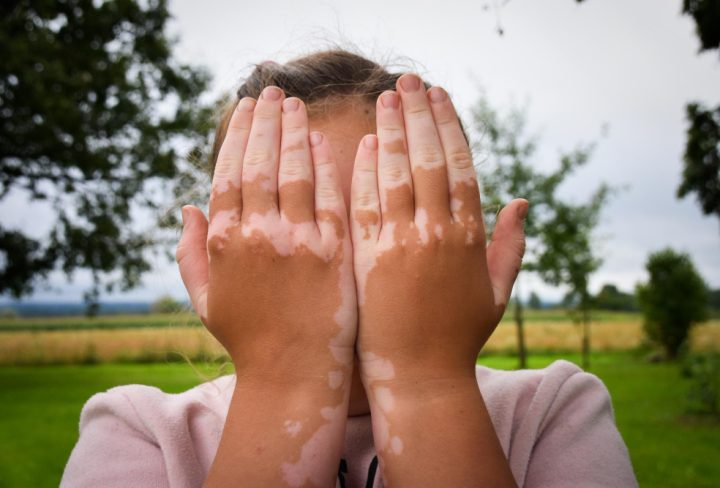
What is Vitiligo?
Vitiligo is a skin condition that causes white patches to appear on the skin. These patches form when the skin loses its natural color. Usually, this happens because the cells that make pigment, called melanocytes, stop working or die. As a result, the skin loses its color in certain areas. Vitiligo can affect people of any age, gender, or background. However, it is not contagious, so you cannot catch it from someone else.
Why Do White Patches Appear in Vitiligo?
White patches appear in vitiligo because the skin loses its pigment. Melanocytes are special cells in the skin that make melanin, which gives skin its color. When these cells are damaged or destroyed, the skin cannot produce melanin. Therefore, the affected areas turn white. Sometimes, these patches start small and may grow over time. In many cases, the patches appear on the face, hands, arms, feet, or around body openings like the mouth and eyes.
Common Symptoms of Vitiligo
Vitiligo has some clear signs. While the main symptom is white patches, there are other things to look for as well. For example, you may notice:
Usually, these symptoms do not cause pain or itching. However, some people may feel self-conscious about their appearance.
Causes and Risk Factors
Doctors are still learning about the exact cause of vitiligo. However, several factors may play a role. According to the World Health Organization (WHO) and other experts, these include:
Although vitiligo can affect anyone, it is more noticeable in people with darker skin. In some regions, such as India and parts of Africa, vitiligo is more common.
How Vitiligo is Diagnosed
If you notice white patches on your skin, it is important to see a dermatologist. First, the doctor will ask about your medical history and examine your skin. Next, they may use a special lamp, called a Wood’s lamp, to look at the patches. Sometimes, a small skin sample (biopsy) or blood tests are needed to rule out other conditions. Early diagnosis can help you get the right treatment and support.
Treatment Options for Vitiligo
While there is no cure for vitiligo, several treatments can help restore skin color or slow the spread of patches. Treatment choices depend on your age, how much skin is affected, and your preferences. Common options include:
Because each person is different, what works for one may not work for another. Therefore, it is important to talk with your doctor about the best plan for you.
Lifestyle Tips and Prevention
Although you cannot always prevent vitiligo, some steps can help you manage it better. For instance:
With the right care, many people with vitiligo lead healthy, active lives.
When to See a Dermatologist
If you notice new white patches or changes in your skin color, it is a good idea to see a dermatologist. Early treatment can help slow the spread of vitiligo and improve your quality of life. Moreover, a skin doctor can help you find the best treatment and offer support. Remember, you do not have to face vitiligo alone.
If you have concerns about white patches or vitiligo, consult a dermatologist for personalized advice and care.